



How It's Made:
Master Series Rugs
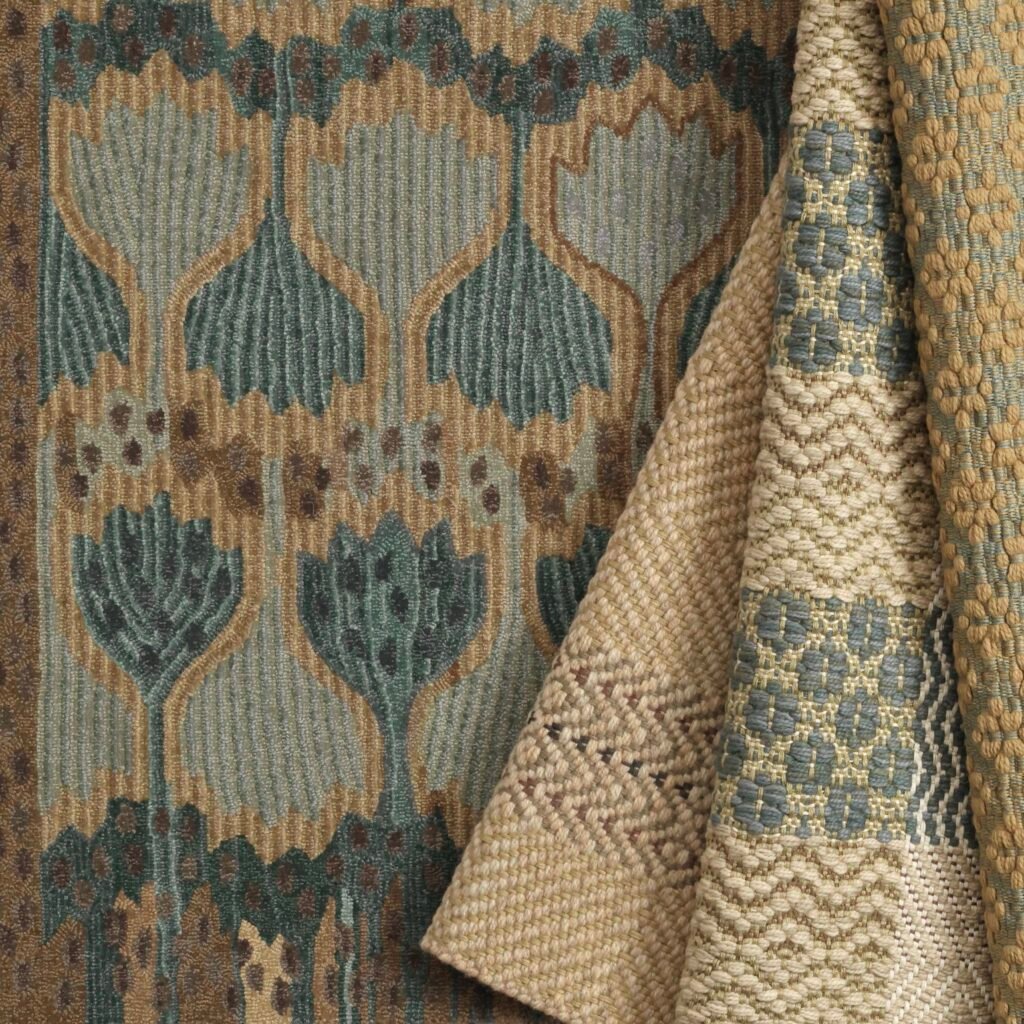
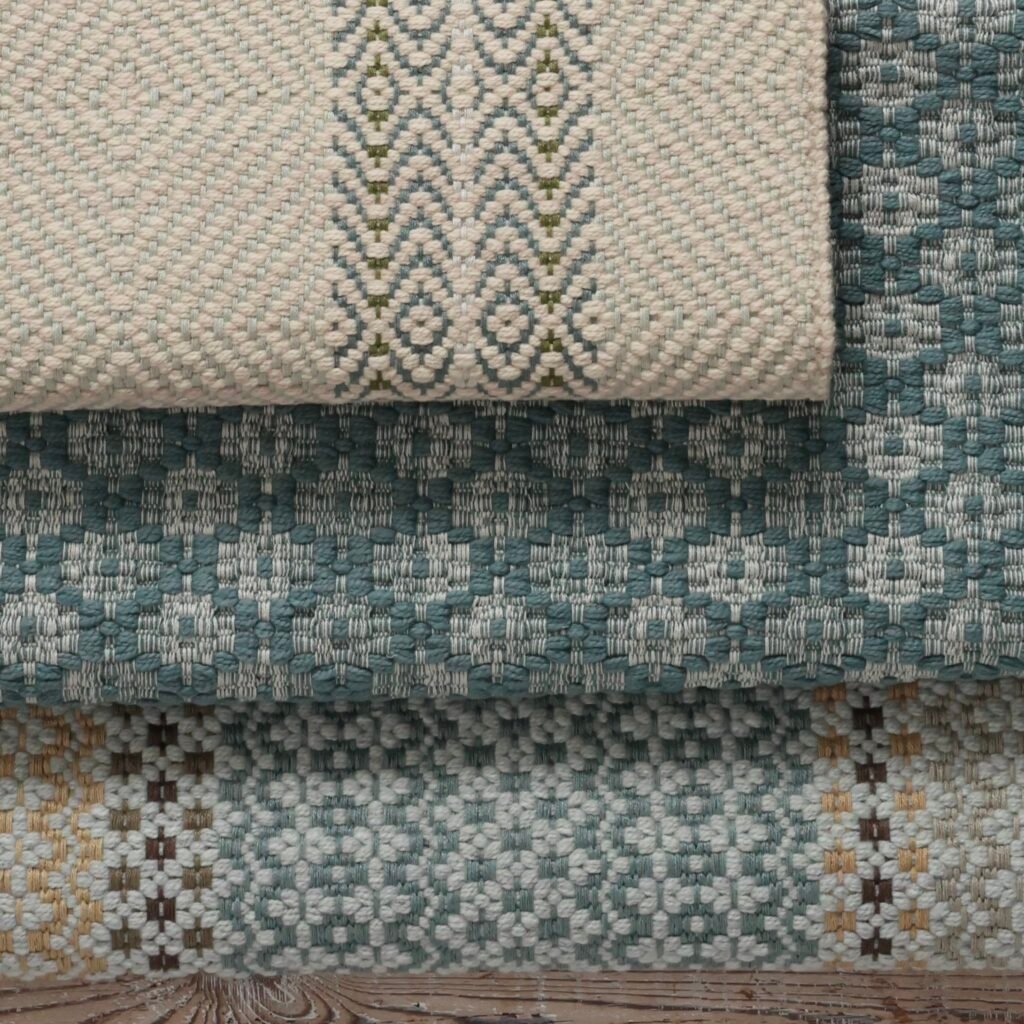
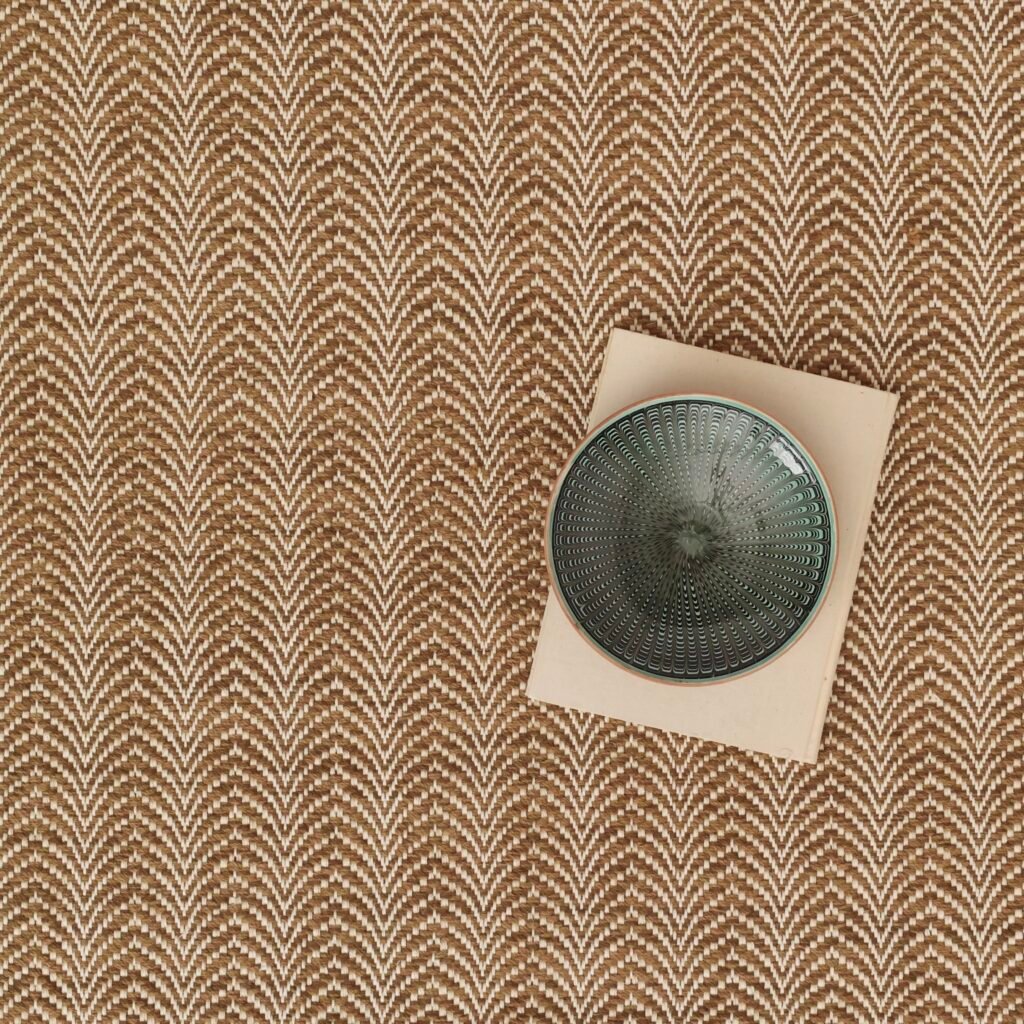
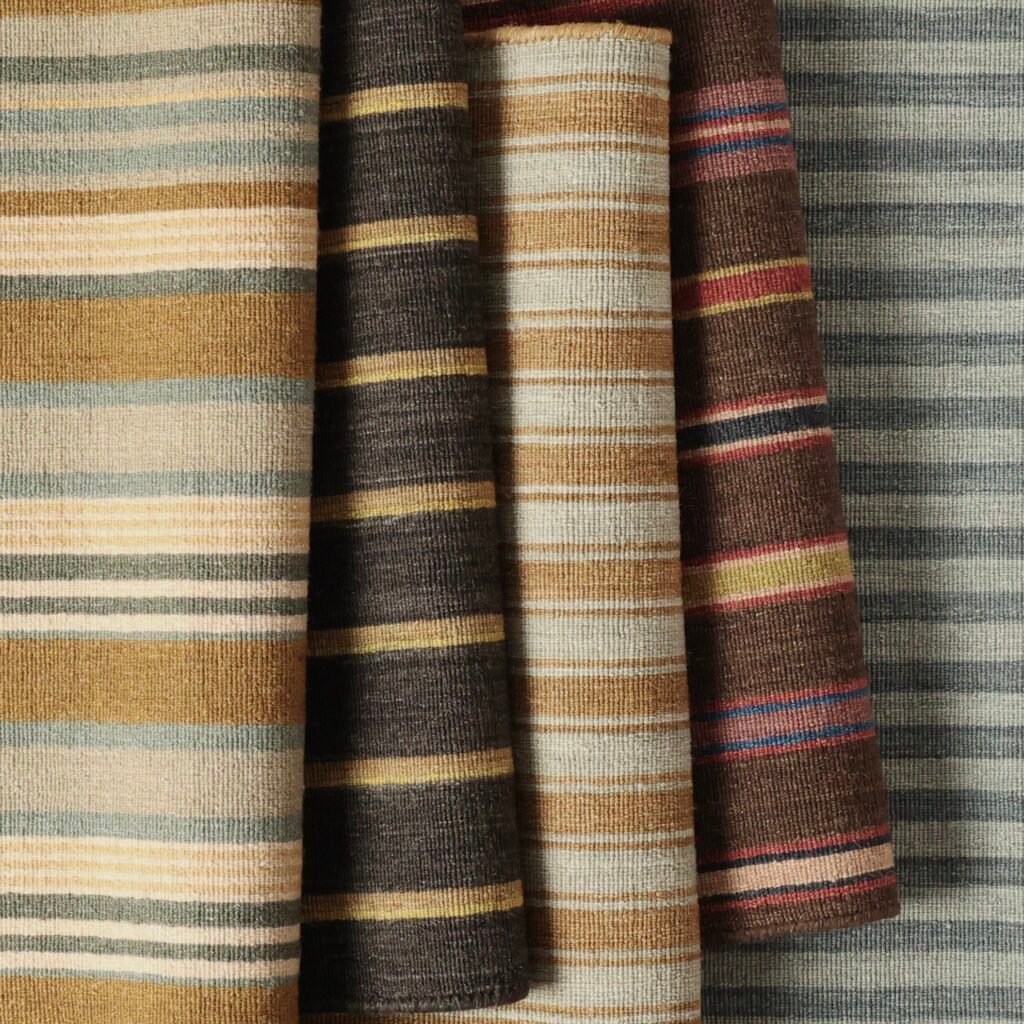
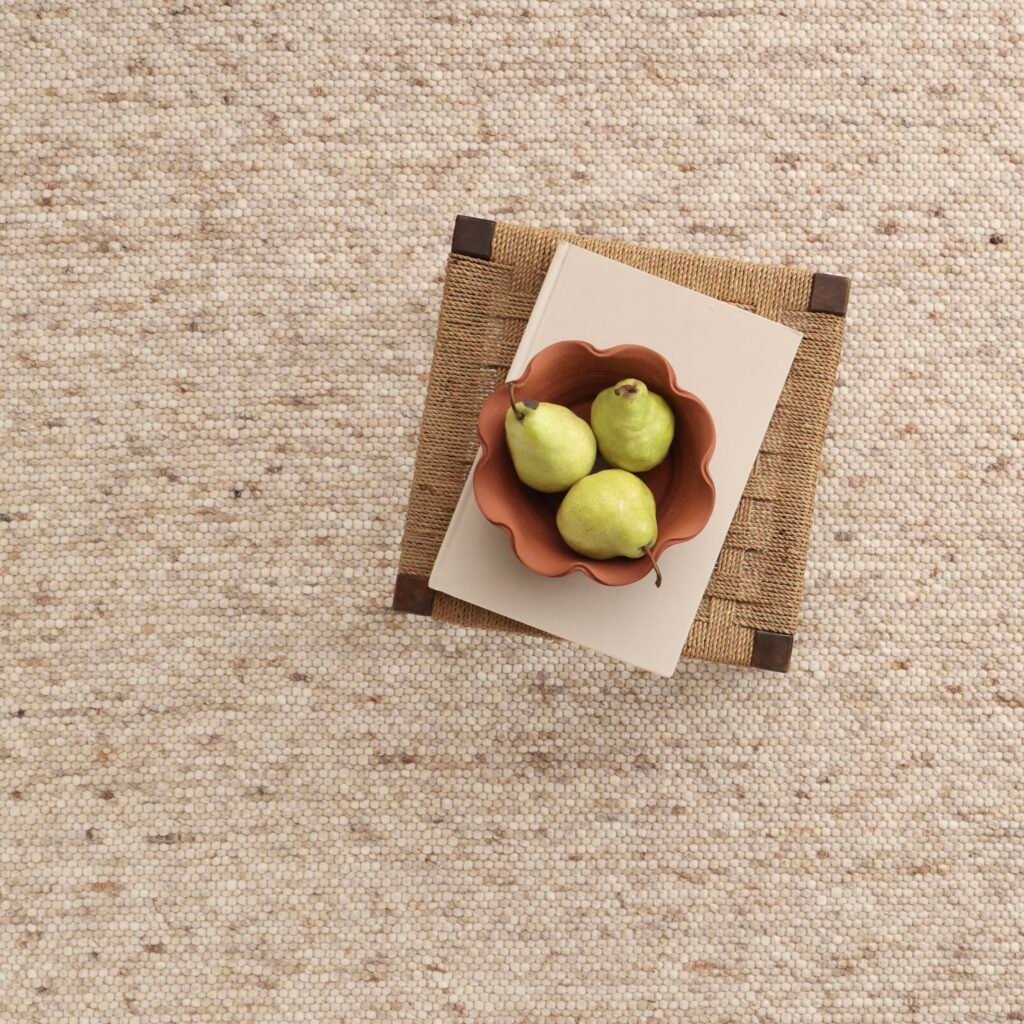
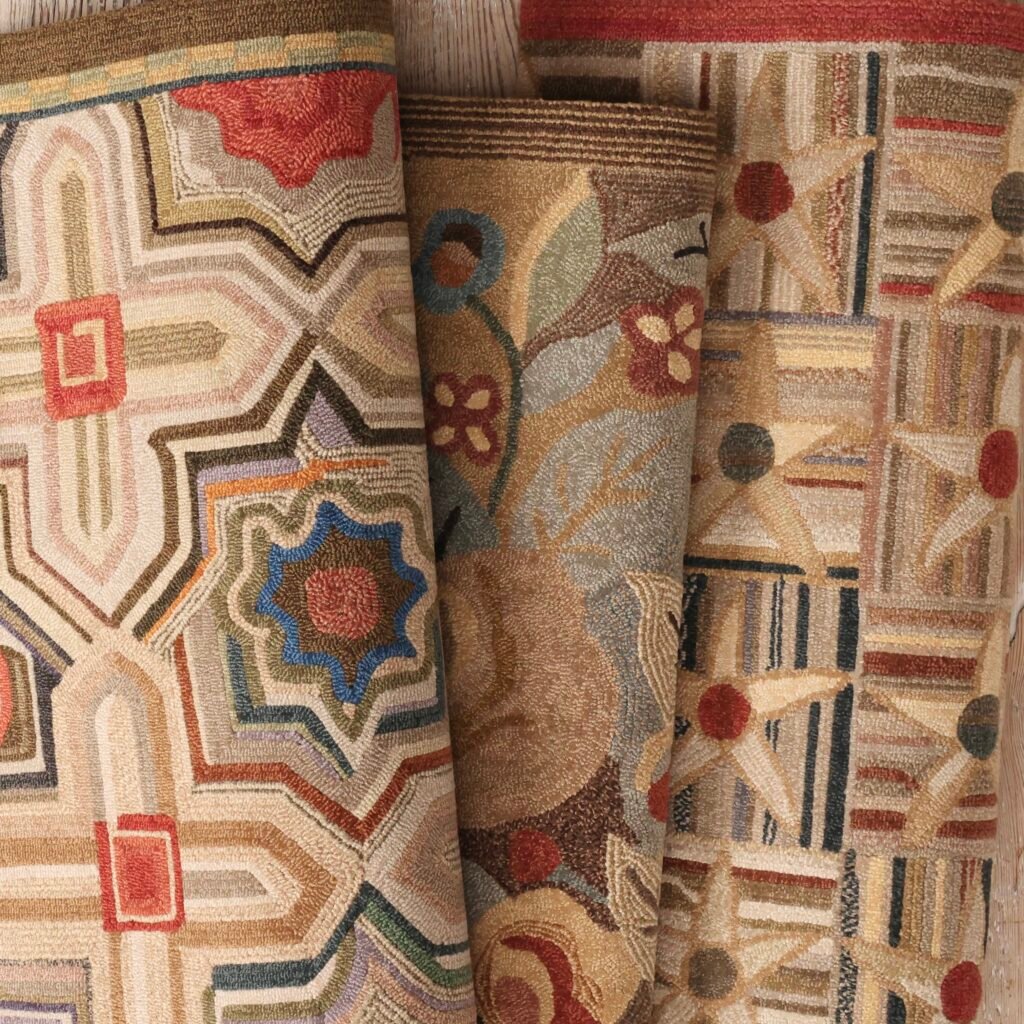
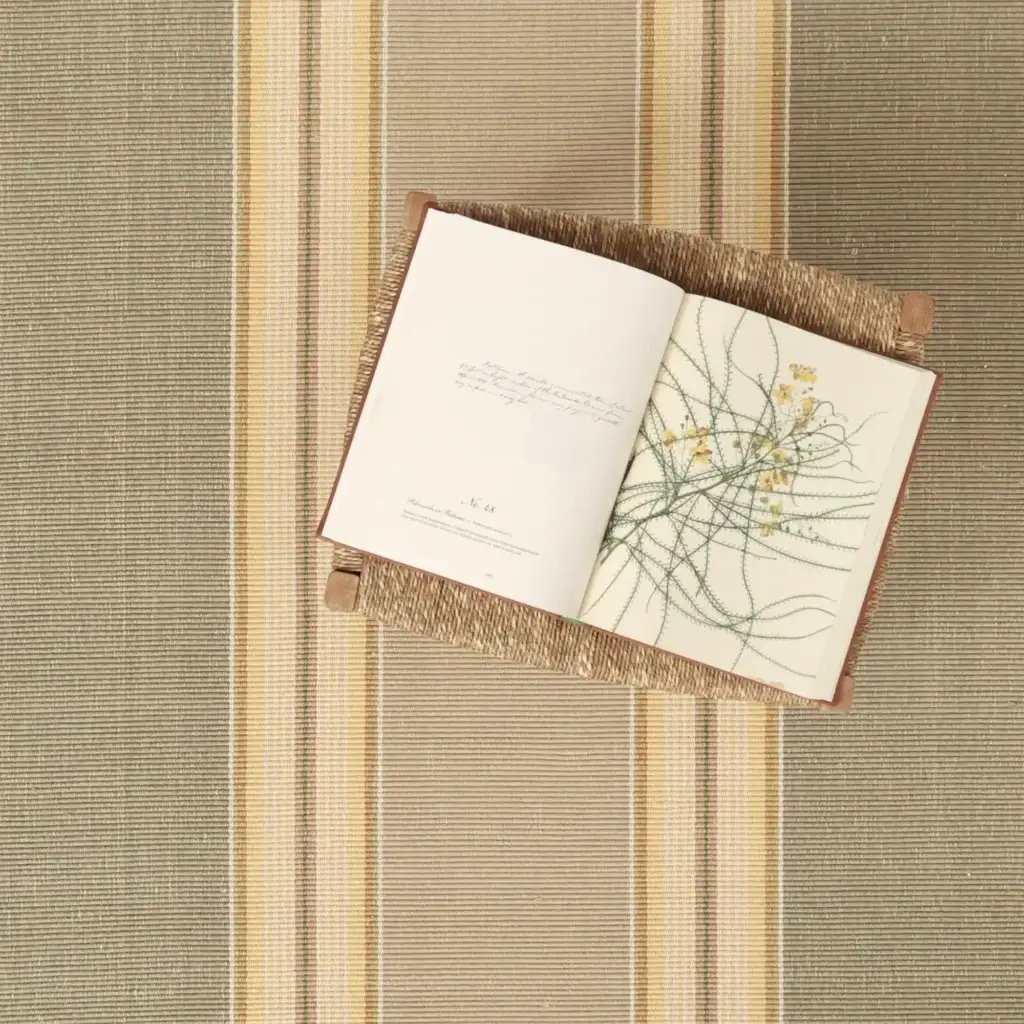
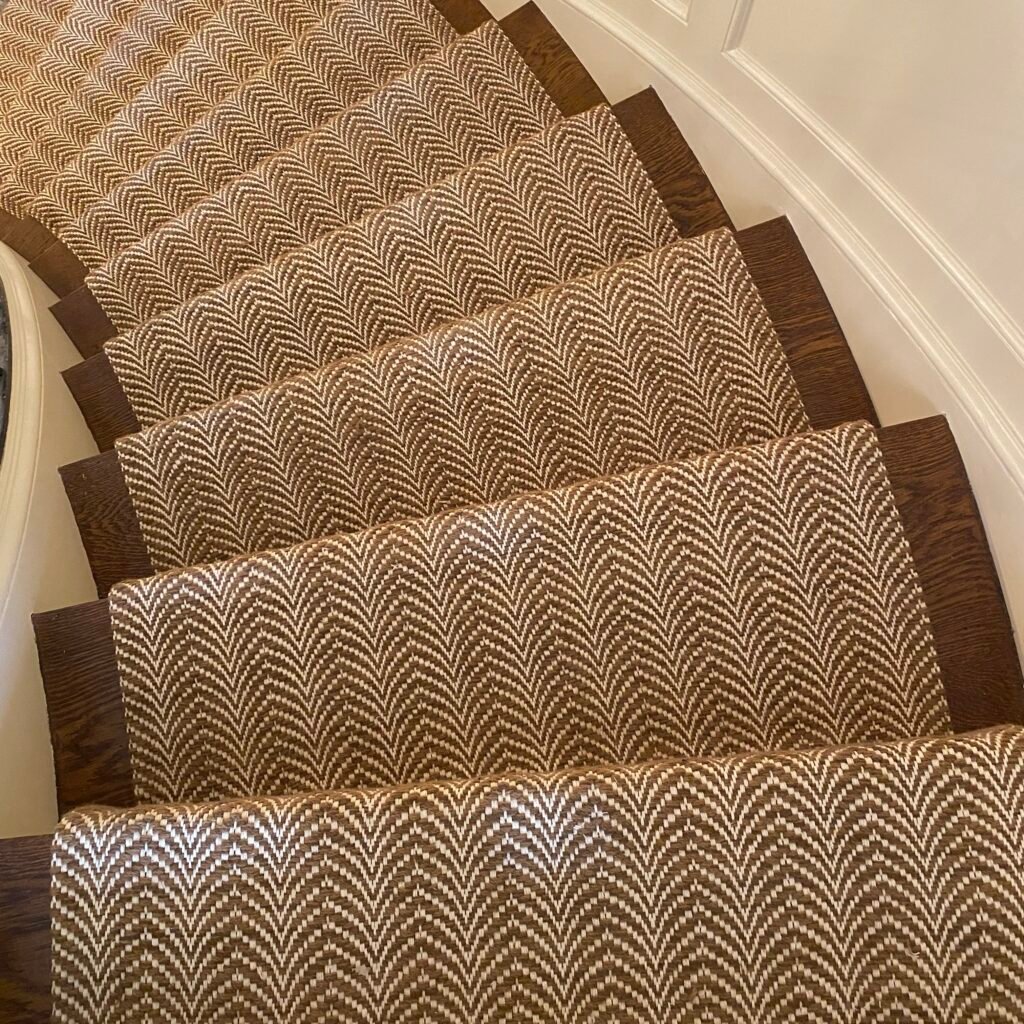
Our iconic Master Series rugs date back to 1978 when the Elizabeth Eakins brand was born. Every aspect of production takes place in our Connecticut Studio, from hand-dyeing the New Zealand wool yarn, to hand-weaving and finishing the rugs. These rugs are woven in panels by our master weavers on narrow looms, and then hand-laced together to create the full rugs. We use only natural fibers (wool and linen) which can be returned to the earth after their full lifespan.
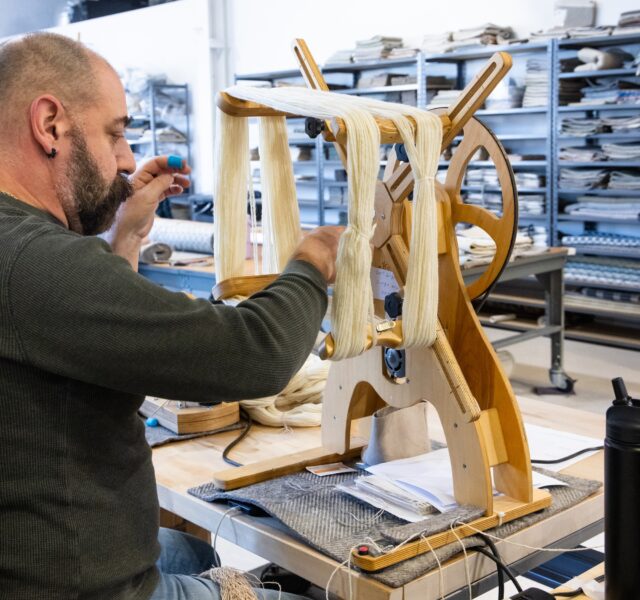
Step One: Preparing the yarn
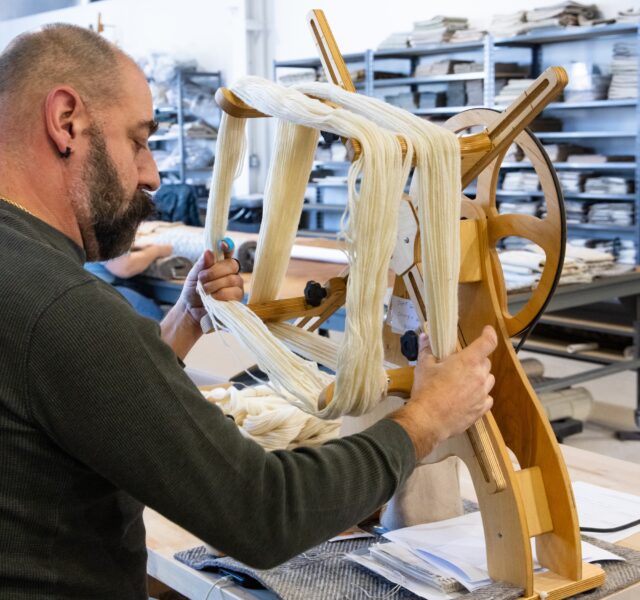
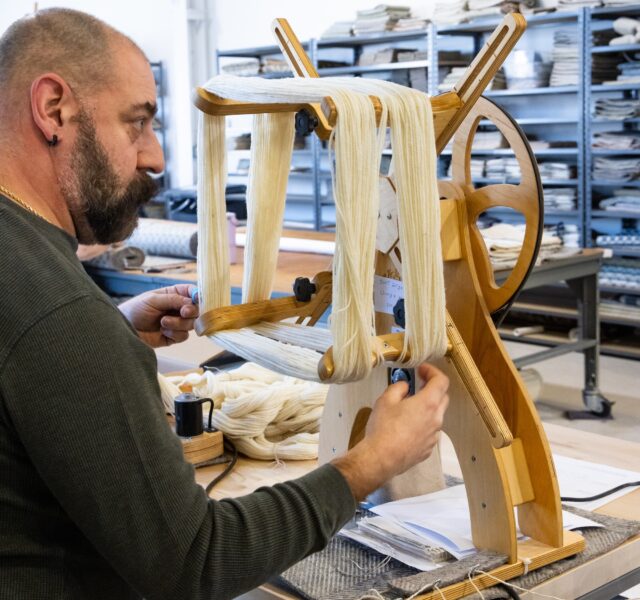
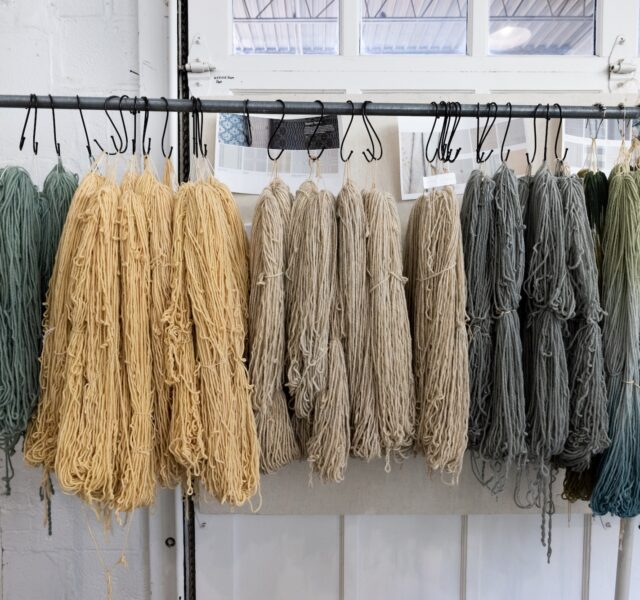
New Zealand wool yarn arrives at our Connecticut Studio in tightly wound "cones", which are spun into loose skeins in preparation for dyeing. The open structure of the skeins enables the yarn to absorb dye most effectively.
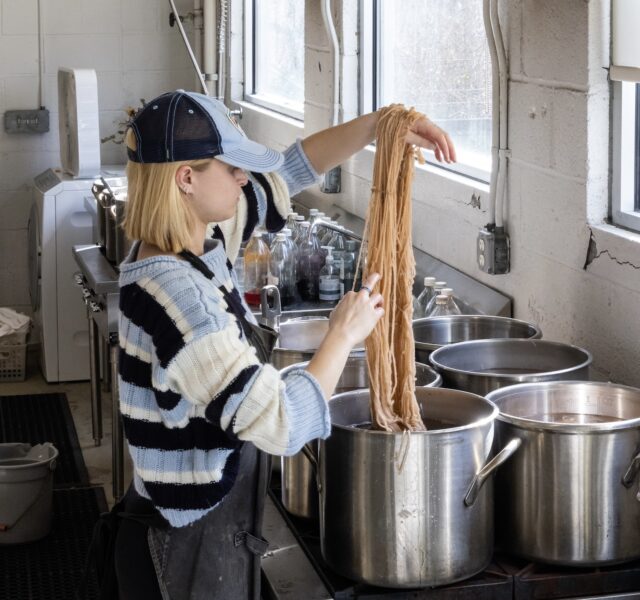
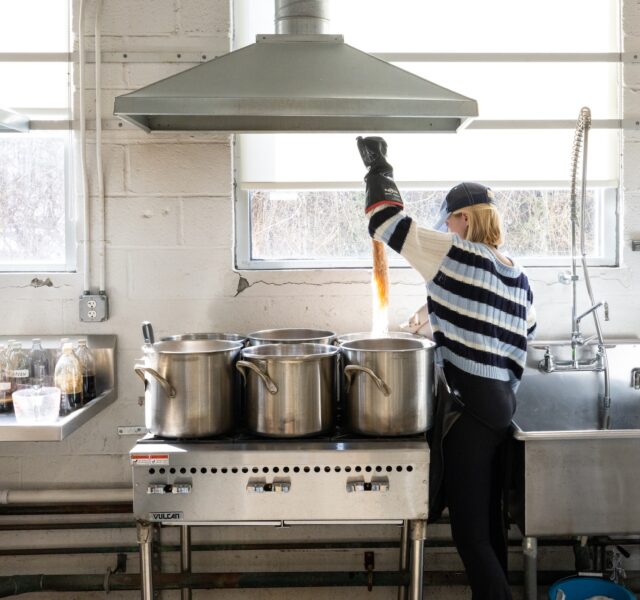
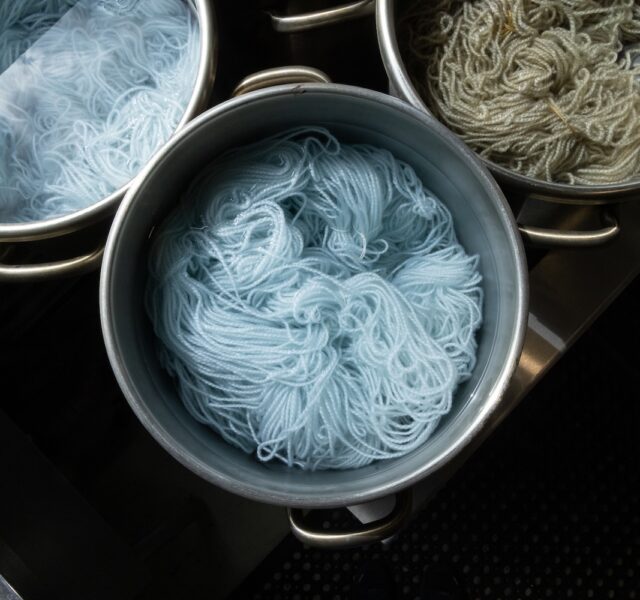
Step Two: Dyeing the yarn
We start the dyeing process by heating open vats of water to the appropriate temperatures and adding the skeins of wool and dye to achieve the client's desired shade of color. We have been using the same dyeing techniques for our Master Series since 1978.
We have dyed our wool into thousands of colors, and each color has a "recipe" which is kept in our records for future use. Depending on the colors that a rug needs, dyeing the yarn for one rug can take one to five days.
Step Three: Preparing the loom
Once the skeins are dyed, they are wound into balls so the weavers can begin threading the looms.
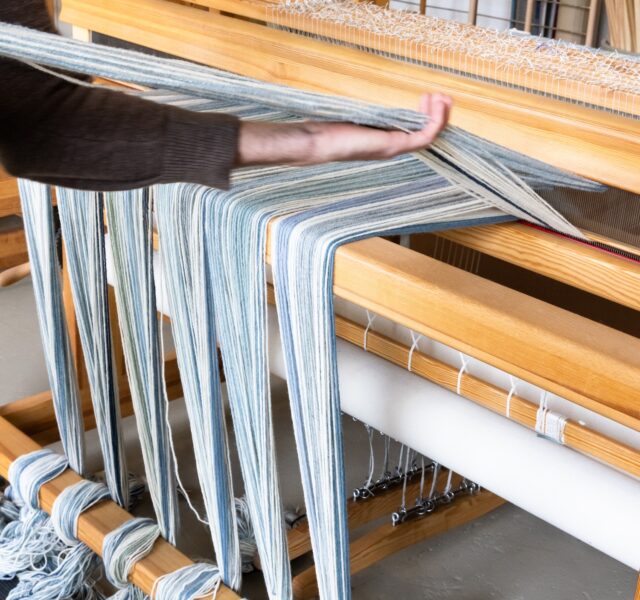
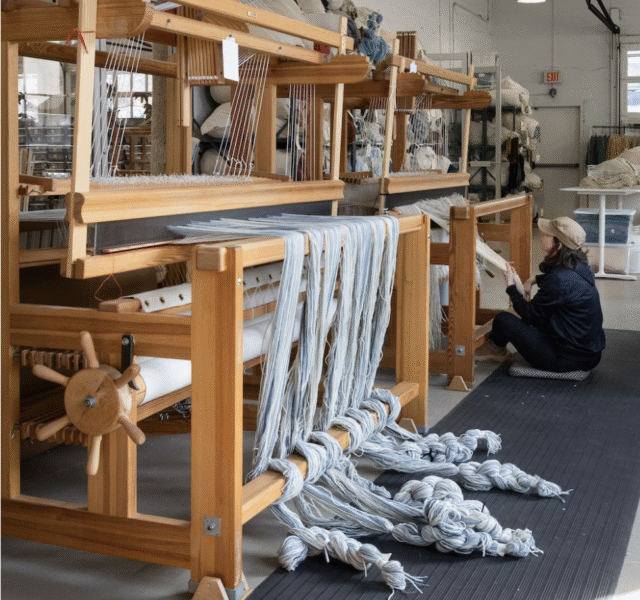
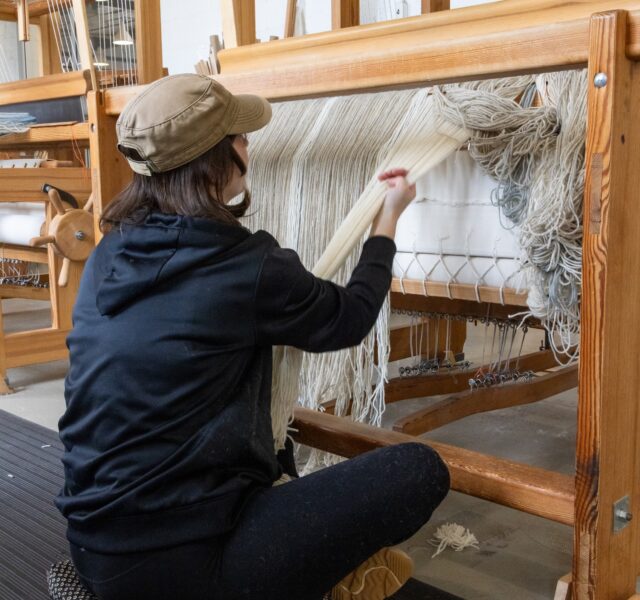
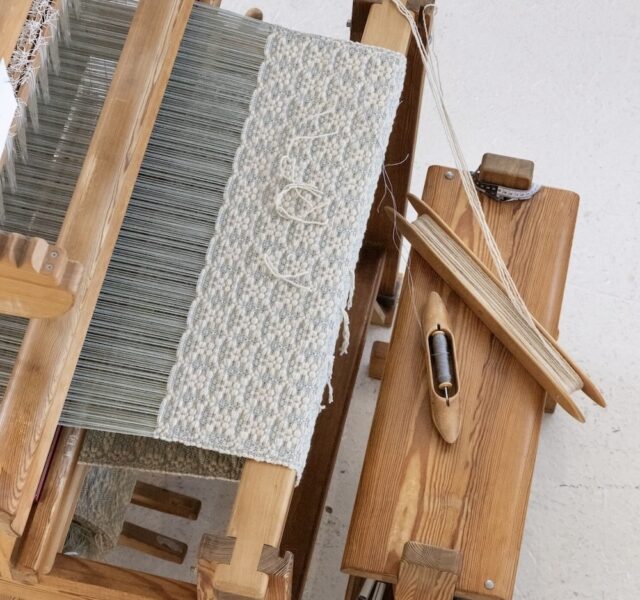
Preparing the loom begins by setting up the warp (the long threads that run lengthwise on the loom and form the foundation of the rug). These warp threads are stretched tightly from the back beam to the front beam and are threaded through heddles and a reed, which keep them evenly spaced and aligned.
As the weaver combs the threads into alignment, the warp is wound back onto the beam, preparing the loom for weaving.
Step Four: Weaving
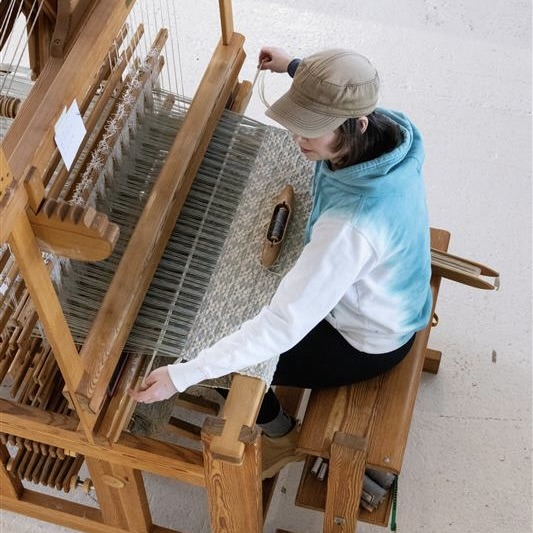
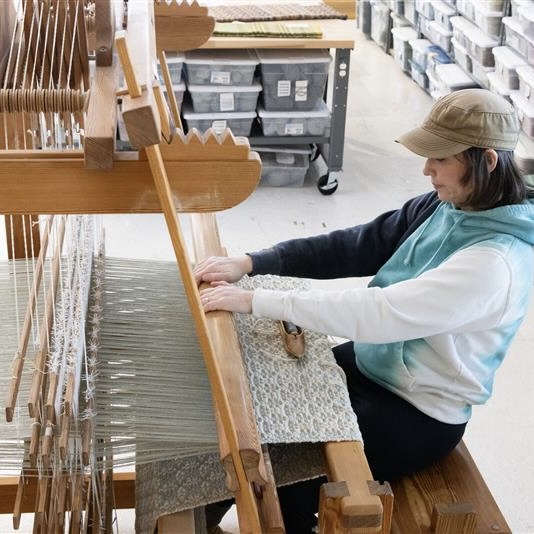
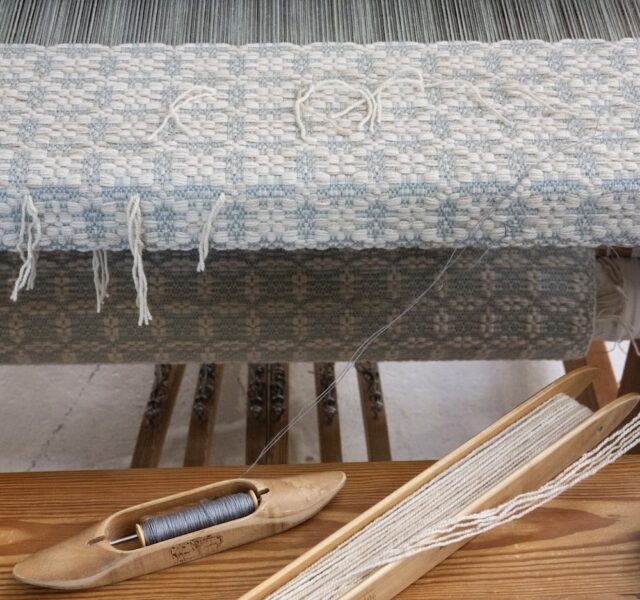
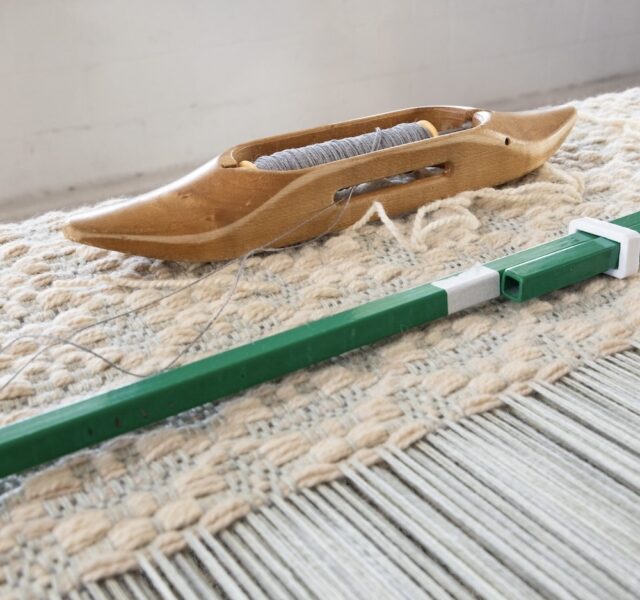
Once the loom is warped, the weaver begins weaving the weft (the yarn that is passed side to side across the warp). By pressing treadles, the weaver lifts specific warp threads, creating a space through which the weft is passed. After each pass, the reed is pulled forward to pack the weft tightly in place, building the dense structure needed for a durable rug. This process is repeated row by row, gradually forming the rug’s pattern and texture until the weaving is complete and the finished rug is cut from the loom.
The average Master Series rug takes one weaver four to five weeks to weave.
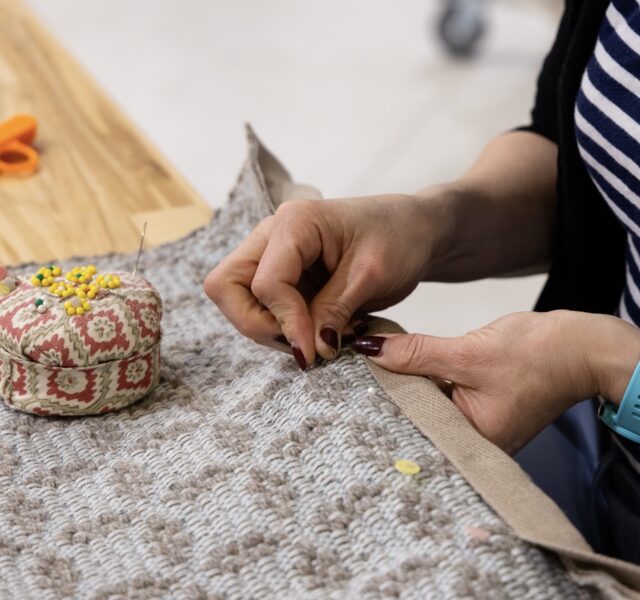
Step Five: Hand-seaming the panels
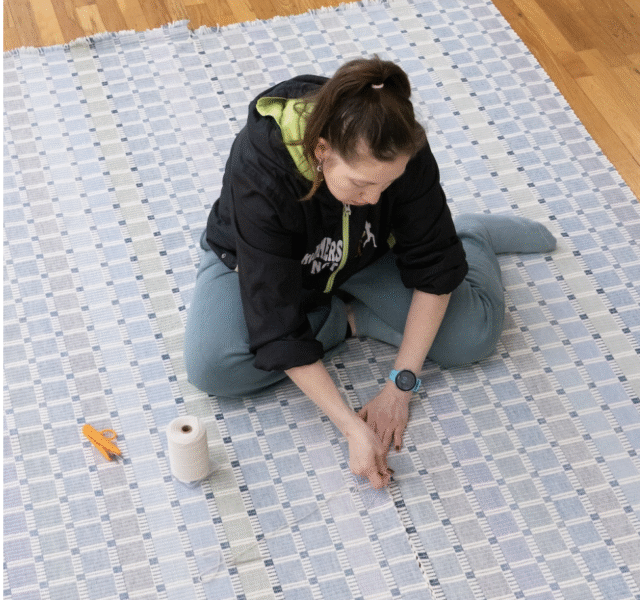
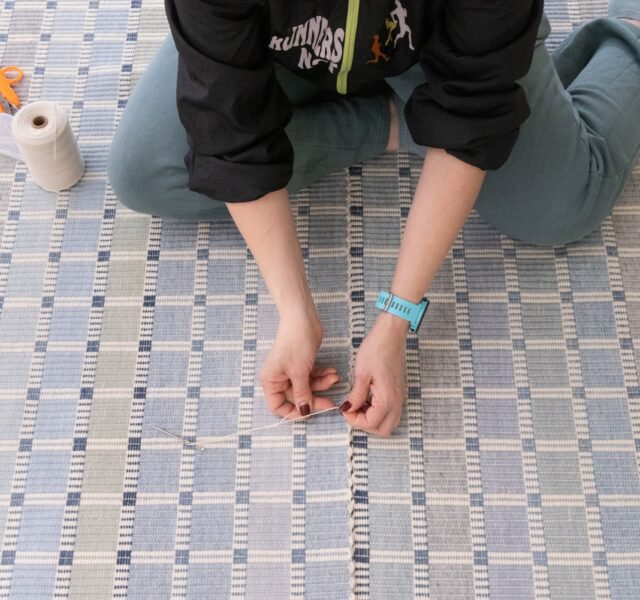
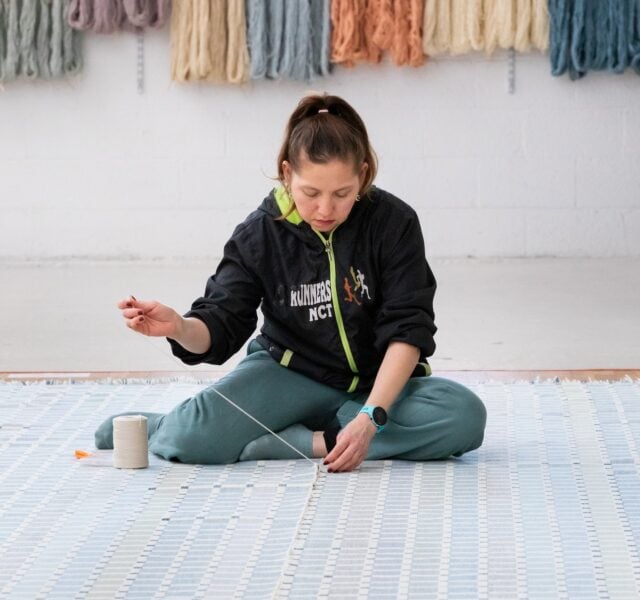
Because our looms are 48" wide, most Master Series rugs are woven in panels that are seamed together after the weaving has been completed.
The panels are hand-seamed together by our team in the Connecticut Studio. Depending on the rug, a seam can fade into the overall rug pattern, or it can become a feature of the pattern, attesting to the hand-woven nature of the rug.
Step Six: Finishing the rug
Once the panels of a Master Series rug have been seamed together, the ends that have been cut off of the loom are finished using a blind or reversible binding. Our team in Connecticut applies the bindings by hand.
Explore the Master Series Collection
Have a question?
See our Master Series FAQs below
Please reach out to your local Holland & Sherry or Elizabeth Eakins salesperson to place an order for a Master Series rug. You can also inquire at info@elizabetheakins.com.
Please reach out to your local Holland & Sherry or Elizabeth Eakins salesperson to request a quote for a Master Series rug.
Lead times are currently 18 - 32 weeks depending on the project.
Our Master Series wool grids are made of 100% New Zealand wool. Our Master Series linen and wool wovens are made of Belgian linen and New Zealand wool.
Master Series rugs are the perfect option for a designer looking for a truly unique handwoven rug.
Custom color is achievable in both the warp and the weft, and since we control the entire production process in our Connecticut Studio, we are able to adjust as we work through the process and collaborate with the designer real-time. Warp and weft colors can change throughout the rug to create a simple pinstripe along the 2 lengths or layers of color that intersect throughout the overall pattern.